




|||||||
Copyrights © 2026 Venus Home Appliances Pvt. Ltd. All Rights Reserved

Copyrights © 2026 Venus Home Appliances Pvt. Ltd. All Rights Reserved

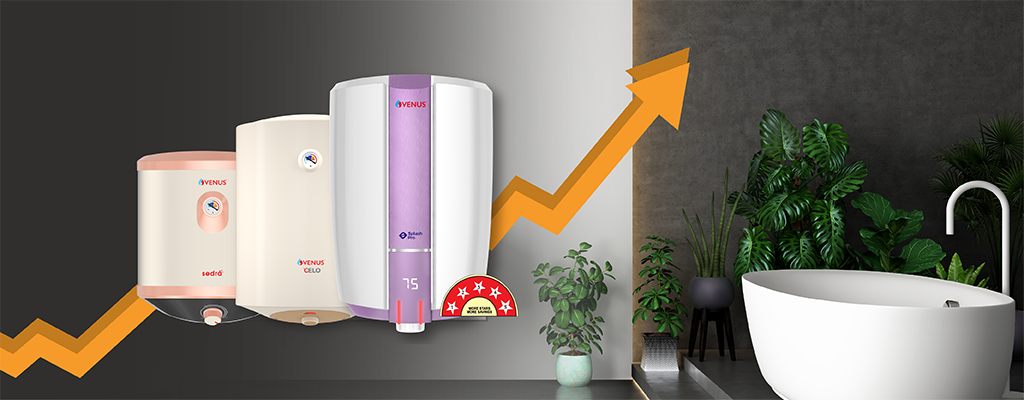
A Professional Perspective from Venus – Hot Water Experts for Over 60 Years. Debunking water heater electricity myths with engineering facts, insulation insights, and running cost calculations.

One of the most common concerns we hear is:
"Won't a water heater increase my electricity bill?"
As hot water professionals, we believe in addressing myths with facts — backed by engineering, not assumptions. Let's break this down clearly.
A storage water heater does not run all day. Here's how it actually works:
Unlike a refrigerator (which runs 24/7) or an air conditioner (which runs for hours), a water heater operates in controlled heating cycles.
For generations, it has been ingrained in the minds of Indians to switch off the water heater immediately after use.
The real factor that determines electricity consumption is: Heat retention efficiency — not just wattage.
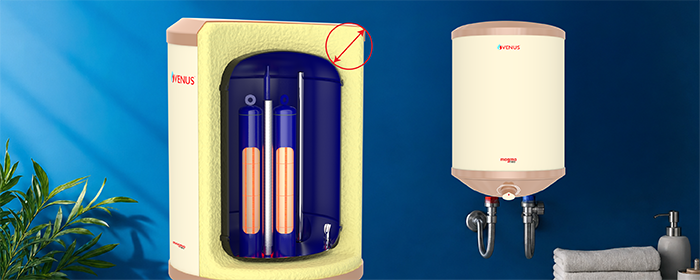
At Venus, energy efficiency begins with superior heat retention. Our water heaters are designed with:
PUF (Polyurethane Foam) acts as a thermal barrier between the inner tank and outer body. This means:
• Hot water stays hot for longer without drawing power.
• Reheating happens far less frequently.
• Electricity consumption reduces significantly.
Heaters with thin insulation lose heat quickly — forcing repeated reheating cycles and higher power bills. Efficiency is not about heating alone; it is about retaining heat intelligently.
| Appliance | Usage Pattern | Energy Impact |
|---|---|---|
| Water Heater | 30–60 mins/day | Controlled |
| Refrigerator | 24 hours/day | Continuous |
| Air Conditioner | 6–8 hrs/day | High |
| Iron Box | High wattage bursts | Moderate |
An AC can consume more electricity in a few hours than a properly insulated water heater does in an entire day.
The misconception arises because people see "2000W" and assume high consumption. But power rating ≠ total electricity used. Usage duration and insulation efficiency determine the real cost.
| Appliance | Assumed Active Consumption | Units / Day | Approx. Cost / Day | Approx. Cost / Month |
|---|---|---|---|---|
| Storage Water Heater (Used & switched off in 2 hrs) | ~3–4 kWh | 3–4 units | ₹24–₹32 | ₹720–₹960 |
| Storage Water Heater (Left ON all day, cycling) | ~6–8 kWh | 6–8 units | ₹48–₹64 | ₹1,440–₹1,920 |
| Refrigerator (24 hrs cycling) | ~1.5 kWh | 1.5 units | ₹12 | ₹360 |

Instead of guessing your electricity usage, we encourage customers to calculate it scientifically. We have developed an interactive Power Consumption Calculator that helps you:
Calculate your energy savings and explore custom estimates for your household:
Open Savings Calculator → Scan to Calculate
As hot water professionals, we recommend following these simple best practices:
Oversized heater → wasted standby energy.
Undersized heater → frequent reheating and long waiting times.
Professional selection ensures optimal efficiency and lower power bills.
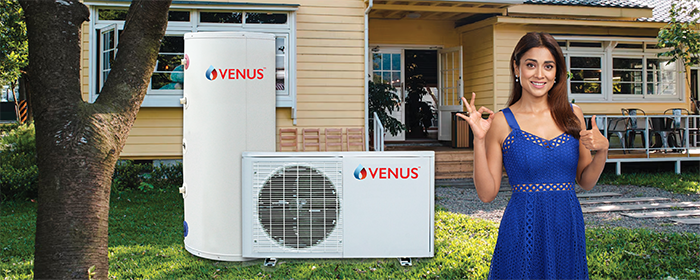
For households with high hot water demand, heat pump water heaters offer up to 60–70% lower electricity consumption by extracting heat from ambient air. This is the future of sustainable hot water.
Water heaters do not consume excessive electricity. Poorly designed heaters do. When built with:
A water heater becomes one of the most controlled and energy-efficient appliances in your home.
For over six decades, Venus has engineered hot water solutions built on technology leadership, energy efficiency, tank durability, and professional expertise. We don’t just manufacture water heaters — we engineer hot water systems designed for performance, safety, and long-term savings.
Speak to our hot water experts today! Call Customer Care: 08144666999
| Air Conditioner (8 hrs daily use) |
| 12–16 kWh |
| 12–16 units |
| ₹96–₹128 |
| ₹2,880–₹3,840 |